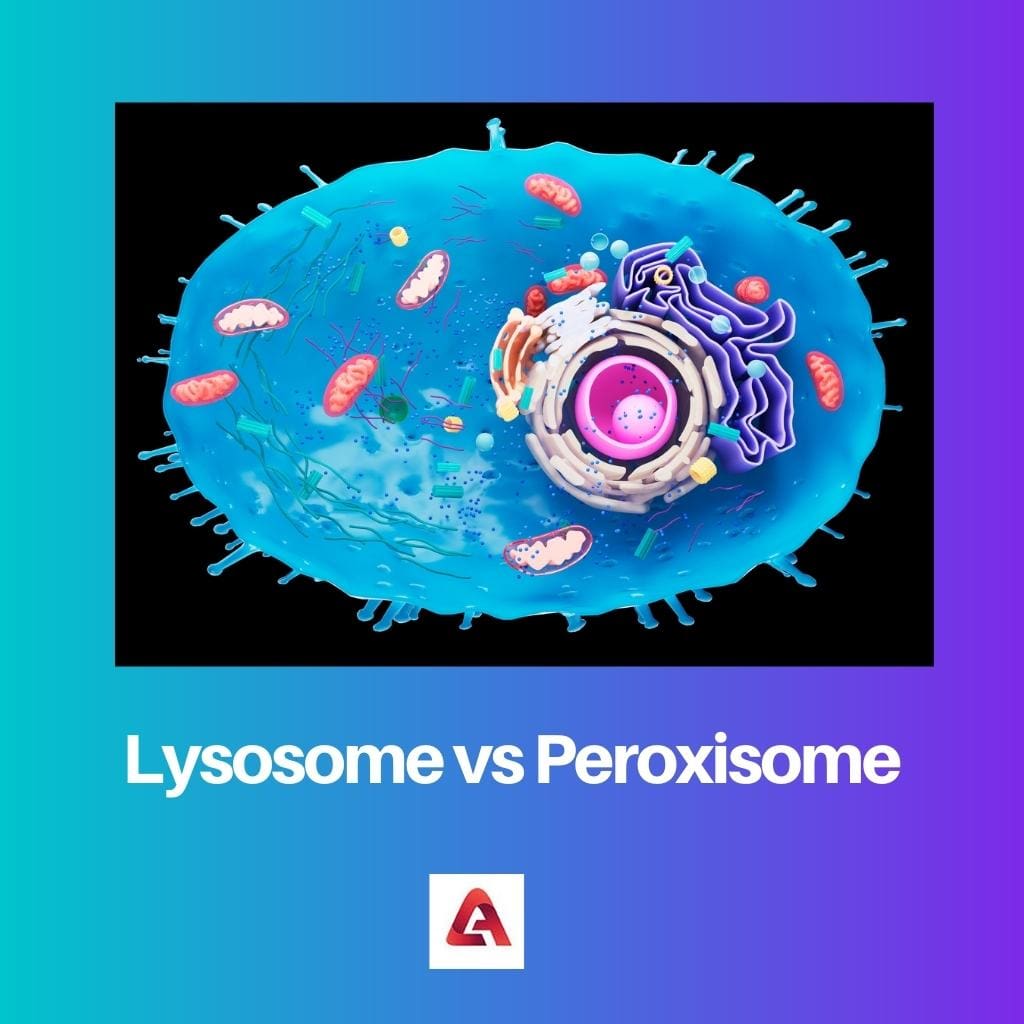
In the intricate world of cellular biology, the lysosome vs peroxisome debate often arises due to their similar roles in cellular metabolism and waste management. Both organelles are crucial for maintaining cellular homeostasis, but they have distinct functions and characteristics. Understanding the differences between lysosomes and peroxisomes is essential for grasping the complexities of cellular processes.
Understanding Lysosomes
Lysosomes are membrane-bound organelles found in animal cells. They are often referred to as the "recycling centers" of the cell because they break down waste materials and cellular debris. Lysosomes contain a variety of hydrolytic enzymes that can digest proteins, nucleic acids, carbohydrates, and lipids. These enzymes function optimally in the acidic environment of the lysosome, which is maintained by proton pumps in the lysosomal membrane.
Lysosomes play a critical role in several cellular processes, including:
- Autophagy: The process by which cells degrade their own components.
- Endocytosis: The uptake of extracellular materials through the cell membrane.
- Phagocytosis: The engulfment and digestion of large particles, such as bacteria.
Lysosomes are formed from the Golgi apparatus and can fuse with endosomes to form endolysosomes, which further degrade the contents. This fusion process is tightly regulated to prevent the release of lysosomal enzymes into the cytoplasm, which could be detrimental to the cell.
Understanding Peroxisomes
Peroxisomes are also membrane-bound organelles found in both plant and animal cells. They are involved in various metabolic processes, particularly the breakdown of fatty acids and the detoxification of harmful substances. Peroxisomes contain enzymes that catalyze reactions involving hydrogen peroxide (H2O2), which is both produced and degraded within the organelle.
Peroxisomes are essential for several key functions, including:
- Beta-oxidation of very-long-chain fatty acids: This process is crucial for energy production and lipid metabolism.
- Detoxification of reactive oxygen species (ROS): Peroxisomes help protect the cell from oxidative damage by breaking down hydrogen peroxide.
- Synthesis of plasmalogens: These are essential components of cell membranes, particularly in the brain and lungs.
Peroxisomes can be formed de novo from the endoplasmic reticulum (ER) or by the division of pre-existing peroxisomes. This dynamic nature allows peroxisomes to adapt to the cell's metabolic needs.
Lysosome Vs Peroxisome: Key Differences
While both lysosomes and peroxisomes are involved in cellular metabolism and waste management, they have several key differences:
| Characteristic | Lysosome | Peroxisome |
|---|---|---|
| Primary Function | Degradation of waste materials and cellular debris | Breakdown of fatty acids and detoxification of harmful substances |
| Enzymes | Hydrolytic enzymes (e.g., proteases, nucleases, lipases) | Oxidative enzymes (e.g., catalase, superoxide dismutase) |
| pH | Acidic (pH 4.5-5.0) | Neutral (pH 7.0-8.0) |
| Origin | Formed from the Golgi apparatus | Formed from the endoplasmic reticulum or by division of pre-existing peroxisomes |
These differences highlight the specialized roles of lysosomes and peroxisomes in cellular metabolism and homeostasis.
📝 Note: The pH of lysosomes is crucial for the activity of their hydrolytic enzymes, while the neutral pH of peroxisomes is optimal for their oxidative enzymes.
Role in Disease and Therapeutic Targets
Dysfunction in lysosomes and peroxisomes can lead to various diseases, making them important therapeutic targets. Understanding the lysosome vs peroxisome differences can provide insights into the pathogenesis of these diseases and potential treatment strategies.
Lysosomal storage diseases (LSDs) are a group of inherited metabolic disorders caused by the deficiency of lysosomal enzymes. These diseases result in the accumulation of undigested materials within lysosomes, leading to cellular dysfunction and tissue damage. Examples of LSDs include:
- Tay-Sachs disease: Caused by a deficiency in the enzyme hexosaminidase A, leading to the accumulation of gangliosides in the brain.
- Gaucher disease: Caused by a deficiency in the enzyme glucocerebrosidase, leading to the accumulation of glucocerebroside in macrophages.
Peroxisomal disorders, on the other hand, are caused by defects in peroxisome biogenesis or function. These disorders can affect various metabolic pathways, leading to severe clinical manifestations. Examples include:
- Zellweger syndrome: A severe peroxisomal disorder characterized by the absence of functional peroxisomes, leading to multiple organ dysfunction.
- X-linked adrenoleukodystrophy (X-ALD): Caused by a defect in the ABCD1 gene, leading to the accumulation of very-long-chain fatty acids in the brain and adrenal glands.
Research into the lysosome vs peroxisome differences has led to the development of targeted therapies for these diseases. For example, enzyme replacement therapy (ERT) is a common treatment for LSDs, where the deficient enzyme is administered to patients to restore lysosomal function. Similarly, gene therapy and small molecule inhibitors are being explored as potential treatments for peroxisomal disorders.
📝 Note: The development of targeted therapies for lysosomal and peroxisomal disorders highlights the importance of understanding the unique functions and mechanisms of these organelles.
Future Directions in Lysosome and Peroxisome Research
Despite significant advances in our understanding of lysosomes and peroxisomes, many questions remain unanswered. Future research should focus on elucidating the molecular mechanisms underlying their biogenesis, function, and regulation. This knowledge can pave the way for the development of novel therapeutic strategies for lysosomal and peroxisomal disorders.
Some key areas for future research include:
- Identifying novel lysosomal and peroxisomal proteins and their functions.
- Understanding the crosstalk between lysosomes and peroxisomes in cellular metabolism.
- Exploring the role of lysosomes and peroxisomes in aging and age-related diseases.
- Developing new therapeutic approaches, such as gene editing and small molecule modulators, for lysosomal and peroxisomal disorders.
By addressing these research questions, we can gain a deeper understanding of the lysosome vs peroxisome debate and their roles in health and disease.
In conclusion, lysosomes and peroxisomes are essential organelles with distinct functions in cellular metabolism and homeostasis. Understanding the differences between lysosomes and peroxisomes is crucial for appreciating their roles in health and disease. Future research in this area holds promise for the development of novel therapeutic strategies for lysosomal and peroxisomal disorders, ultimately improving patient outcomes and quality of life.
Related Terms:
- peroxisomal vs lysosome
- lysosomes and peroxisomes difference
- lysosome microscopic image
- lysosomes and peroxisomes function
- peroxisomes and proteasomes
- lysosome single or double membrane